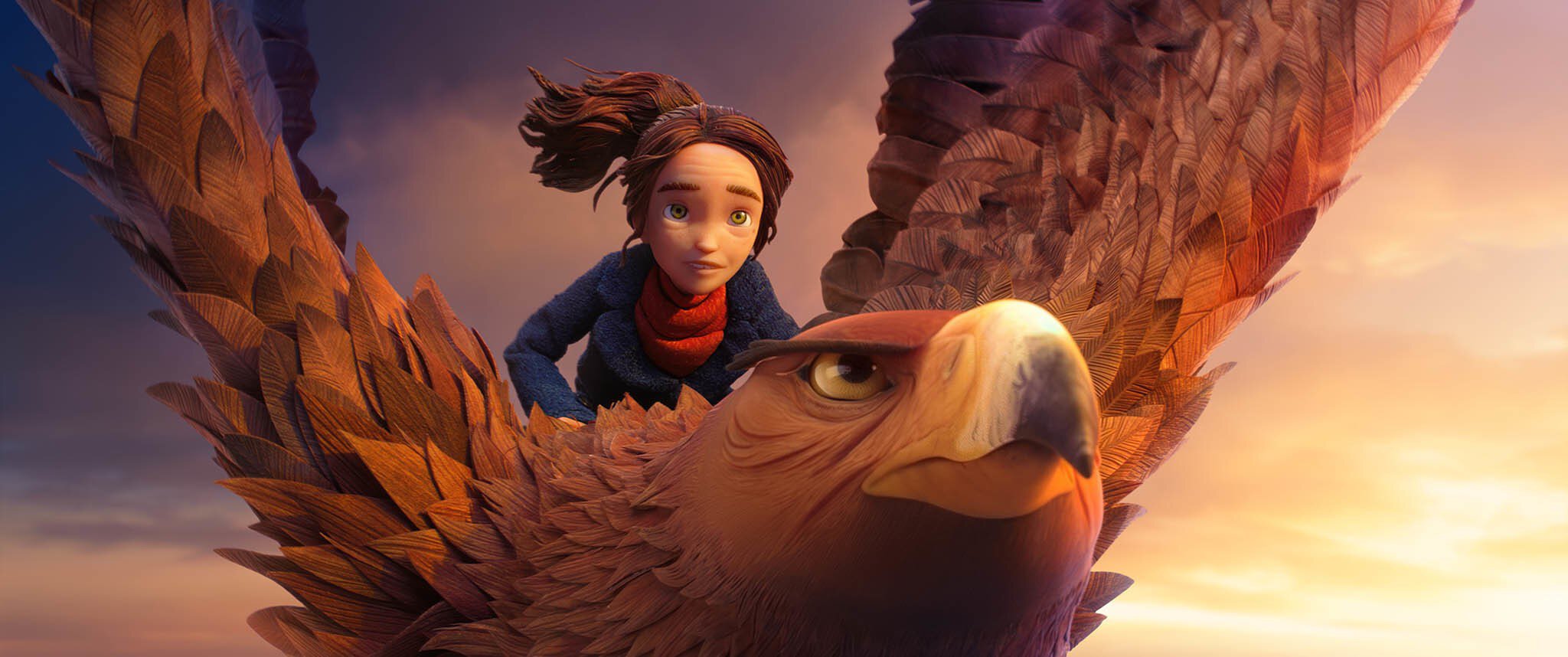

Laika Studios has a rather impressive streak going. In its relatively short lifespan, the stop-motion animation house has put out five films, all of which have been nominated for the Oscar for Animated Feature. Sadly, despite all-time classics like Coraline and Kubo and the Two Strings, they have yet to win. That may very well change with their most ambitious work to date, Wildwood, a vast, epic, fantasy adventure that stretches the very limits of the medium, dazzling the eyes, tugging the heartstrings, and stirring the senses. In a year where the art form of animation has roared back to life with some of the strongest entries in ages (and also Animal Farm), this is one of the very best, as it emphasizes all of the elements that make Laika films great, and then takes them to a whole new level.
If there are any drawbacks to be had, it’s the fact that a) at two hours, 12 minutes, it’s the longest stop-motion film of all time; and b) there are a lot of clear influences in the picture that could be dismissed as derivative. The movie is based on a 2011 novel by Colin Meloy (Laika began securing the film rights and developing a feature almost as soon as the book was published), but you can clearly see references and homages to the likes of Labyrinth, Alfred Hitchcock, Lord of the Rings, The Chronicles of Narnia, and even previous Laika works like Coraline and The Boxtrolls.
I’ll say right upfront, though, none of it bothered me. I’ve mentioned many a time that I don’t care about a lengthy runtime if the film is using it to tell the story properly, and this is a pristine example. This is a sprawling world filled with myriad characters, all of whom having different, understandable motivations, even the villains, and it’s very much to the film’s credit that we take the time to flesh them out. As far as the nods to other media, for me it’s an acknowledgement of basic storytelling structure, that all great art will stand on the shoulders of those who came before. When you see a literal murder of crows descending upon a playground and congregating on the equipment like in The Birds, it’s not a winking nod of awareness of that classic scene, but rather a new application of a familiar visual, recontextualizing it to make it even more ominous based on the audience’s possible knowledge (assuming they’re old enough to have ever seen that previous masterpiece). So yeah, I can understand if people dock the flick points for this stuff, but for me it only enhanced the experience.
Peyton Elizabeth Lee (star of the Doogie Howser reboot Doogie Kameāloha, M.D.) leads the way as Prue, an adolescent girl growing up in Portland. She’s smart and a bit sarcastic, but clearly a caring individual, especially when it comes to her family. Her hippie parents (Maya Erskine and Jake Johnson) are definitely over the top, but you can tell all their hearts are in the right place. The only true oddity is that they don’t allow their toddler son Mac (“voiced” by director Travis Knight’s son Arthur) out of the house. They clearly aren’t this overprotective of Prue, as she goes to public school and has a life outside the home, but they’re adamant that Mac never go out, even if it means home schooling him and raising him to live with them as an adult.
When Prue is left to babysit, she does the one rebellious thing she could possibly do, and takes Mac to the playground, tooling around the city on her bike while Mac gleefully observes from a wagon towed behind. If anything, the parents should be more concerned that the child isn’t secured in said wagon, but the bouncing around and his giggles make for a fun bit of movement in the animation. Prue also encounters her nerdy friend Curtis (Jacob Tremblay), who timidly asks why she doesn’t play Dungeons & Dragons with him anymore. The boy is clearly bad at hiding his crush, but the early interactions between the two help to illustrate where Prue is in her own life, riding that middle period between clinging to childish things and truly growing up.
Things take a drastic change when Mac is kidnapped by birds from the park, and a wild chase ensues, eventually leading to a misty wood on the other side of a disused bridge. Urban myths refer to the place as the Impassable Wilderness, but Prue is not dissuaded from entering in hopes of reclaiming her brother. Before long, she and Curtis come across a pack of anthropomorphic coyotes in army uniforms, and it’s clear that nothing is as it seems. The pair are eventually split up to follow their own paths in this grand journey, with Prue seeking out the help of animals, humans, and politicians of both persuasions to help her out, doing her best to go along with things despite the pure insanity of seeing magic before her very eyes. Meanwhile, Curtis is delivered to the dowager countess, Alexandra, voiced impeccably by Carey Mulligan, who is on the verge of war with the inhabitants of this mythical land in order to undo a tragedy she’s been unable to properly grieve.
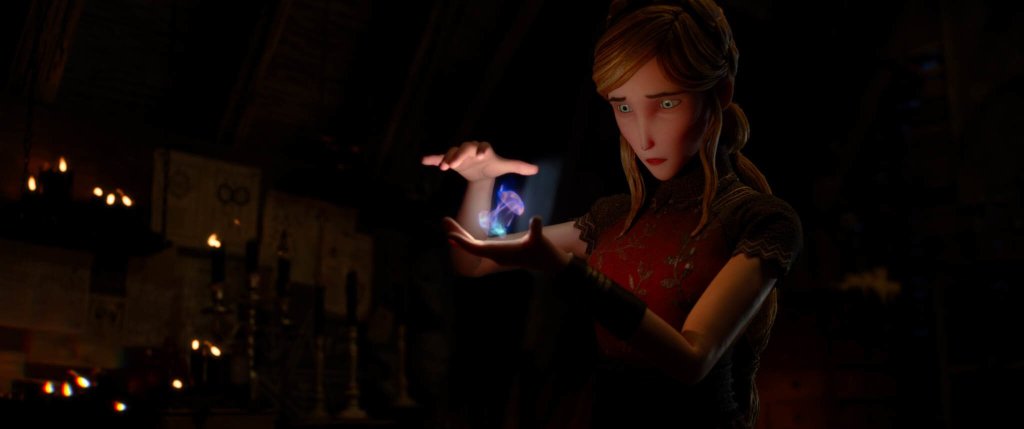
What amazes me about this story is that it has an almost innumerable amount of twists and turns, yet you never lose track of the plot, and all the developments make sense within context. A functionary puppet governor exiles Alexandra because he’s afraid of her use of dark magic, even though he’s shown to be a complete dullard with no independent thought, highlighting how a cult of personality can be enough to sway people despite no actual leadership skills. We learn the backstory of a tribe of “bandits” and how conflicting factions have robbed them of their more altruistic identity. Curtis and Prue each take a different route to learning what it means to have courage and the value of sacrifice, and it feels completely natural to their established characters. Everyone has nuance to their actions, and almost nothing is clear cut black-and-white, save for Prue’s love and determination to save Mac.
All of this is aided by a tremendous supporting voice cast. Mahershala Ali’s Brendan, the leader of the bandits, lends his imposing warrior a wonderful degree of poise and grace. Richard E. Grant and Angela Bassett voice distinguished birds who aid Prue even to their own peril because it’s the right thing to do (it also leads to a really funny exchange with Prue: “Afraid of flying?” “I’m not usually on the outside of the plane!”). Tom Waits as Maksim, the commander of the coyotes, uses his trademark gruff delivery to be properly intimidating. Even Misspelled Bottled Water isn’t all that annoying, playing a friendly rat who helps Curtis, mostly because she’s used sparingly. And on top of all that you have Blythe Danner, Rob Delaney, Tantoo Cardinal, Jemaine Clement, and Charlie Day all providing top notch reads. Hell, Colleen O’Shaugnessey, the voice of Tails the fox in the Sonic the Hedgehog games and movies, chimes in as a delightfully assertive sparrow. It’s insane how great this ensemble is.
They all inhabit this absolutely gorgeous world, far larger in scale than anything Laika has attempted to date. One of the fun traditions of the studio is sitting through the credits and watching a time lapse video of how the artists and crew (led by Caleb Deschanel as the main cinematographer) assemble a shot and move the characters bit by bit to shoot a scene that maybe lasts a few seconds in the finished product. Here, the set pieces, which were already impressive in previous films, are just massive, with so many moving parts that your jaw just drops when you see how even the simplest shots are constructed. In this particular picture, the time lapse is used for a true mid-credits scene rather than showing how a previous bit of action came to be, but even that’s enough for your eyes to bulge, especially when you apply that visual to the mere memory of the climactic battle scene between two massive armies. There are CGI visual effects throughout, but in true Laika fashion, most of those are for backgrounds or smoothing out the transition between different camera angles as the scene itself moves. The vast majority of what you see on screen is done in painstakingly practical detail, and outside of maybe Kubo, it has never looked more streamlined and beautiful.
But really, all of this could look rudimentary, because at the core of the film, the commitment to telling a mature story for families and young viewers remains as stalwart as ever. From the very beginning, what made Laika films so special was the studio’s ability and dedication to talk to the audience about heavy subject matters in a way that’s on their level, but never patronizes their emotional intelligence. Themes like loneliness, grief, darkness, death, and the hard choices we have to make in an unfair world are expertly conveyed in an empathetic way, letting kids know that it’s okay to feel certain things and ask difficult questions, because those who love you will be honest about them while still being supportive. That ethos is cranked up to 11 in this picture, as several characters meet a violent end, and the various reveals in the plot do make you second-guess how you’d act in a similar situation. This is probably why this is the first Laika film to get a PG-13 rating, as some of the darker elements might not be wholly appropriate for the youngest of children, but at the same time, even as an adult you feel stronger as you go with Prue and Curtis on this quest, so if you have a smaller child, I wouldn’t necessarily shy away. There’s an Alice in Wonderland feel to it all, with just enough of a hint to the harshness of reality to keep things grounded, which I think is ultimately beneficial to kids of all ages. I think if there’s a line, it’s Bambi. If your kids can watch Bambi’s mom die without sobbing uncontrollably, I think they’ll be alright here. They may still be crying by the end – and you might be, too – but it’ll be for completely different and positive reasons.
This is yet another triumph for one of the best animation studios in existence. From the expansive narrative, to incredible art style, to the fully committed voice cast, to the amazingly detailed character designs, to what may be the apex of Laika’s heart-wrenching but cathartic level of emotional storytelling, Wildwood represents a giant leap forward in not just the realm of stop-motion, but in the evolution of animation as a medium. The only question that remains is, will it bring the studio their ultimate triumph on Oscar Night? It’s hard to argue against it.
Grade: A
Join the conversation in the comments below! What film should I review next? What’s your favorite Laika movie? How far would you go to save a loved one in danger? Let me know! And remember, you can follow me on Twitter (fuck “X”) as well as Bluesky, and subscribe to my YouTube channel for even more content, and check out the entire BTRP Media Network at btrpmedia.com!


